
Technikum Mittweida Motorsport: Red Viper and advanced BMS
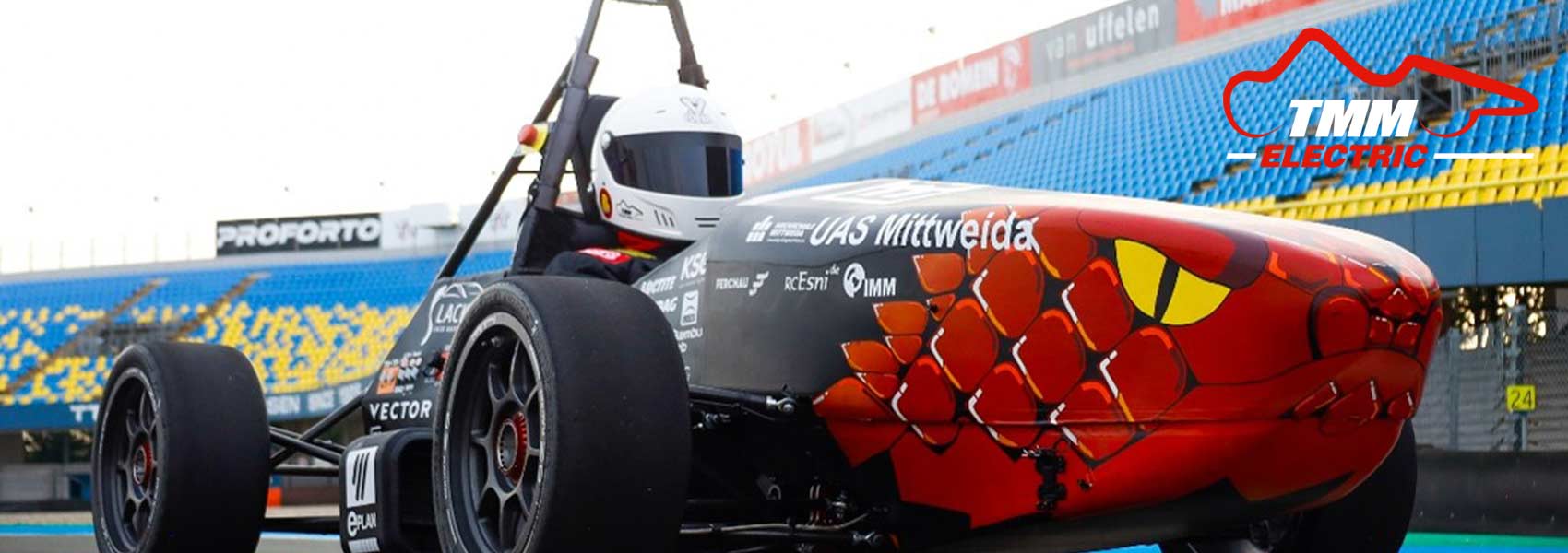
In the tradition of the renowned engineer August Horch, who studied in Mittweida from 1888 to 1891, a group of ambitious engineering students founded Technikum Mittweida Motorsport (TMM) in 2006. What began as a small initiative to develop a combustion race car has grown into a highly specialized Formula Student team driven by innovation, precision and passion.
After developing six combustion vehicles, TMM made the transition to electric mobility in 2018. With our 2025 race car, the “Red Viper,” we proudly introduced our third fully electric vehicle.
The 2025 season marked one of our most successful years to date. Competing at Formula Student Netherlands and Formula Student France. We achieved strong overall results, highlighted by an outstanding 2nd place in the Efficiency category in the Netherlands — out of 44 competing teams.
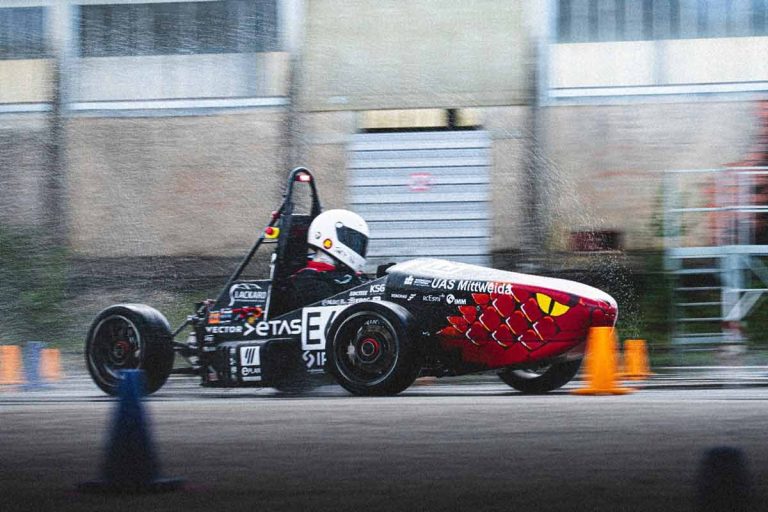
However, Formula Student is defined by continuous development. As we enter the 2026 season — which also marks the 20th anniversary of Technikum Mittweida Motorsport. We are taking the next major step forward: focusing on increased system robustness, improved performance, and reduced overall weight.
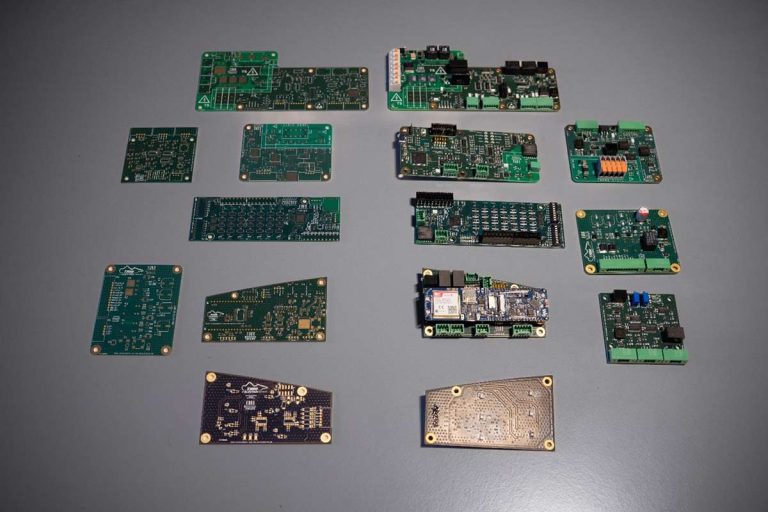
A central part of this evolution is our redesigned accumulator concept. Including a further developed Battery Management System (BMS). The optimized system follows a master–slave structure consisting of one master unit based on an SPC58 microcontroller and ten slave boards equipped with L9963E battery monitoring ICs, communicating via ISO-SPI.
In addition to the revised BMS, we introduced a completely new board within the accumulator: the Tractive System Control Unit (TSCU). It serves as a central safety and control interface inside the accumulator and handles several high-voltage-related tasks, including:
- Logic control of the TSAL (Tractive System Active Light)
- Evaluation of the IMD (Insulation Monitoring Device) signal
- Control of the DC/DC converter
- Management of the pre-charge circuit
- Control of the High Voltage Indicator, a red LED that remains illuminated whenever voltage above 60 V is present in the vehicle — independent of the low-voltage system
In addition to the Accumulator PCBs, we developed a new dashboard concept. The system is designed as a compact PCB stack mounted directly in the cockpit. An ESP32 serves as the central processing unit, enabling wireless data transmission via Wi-Fi and 5G. This allows us to monitor vehicle data in real time during testing and dynamic events.
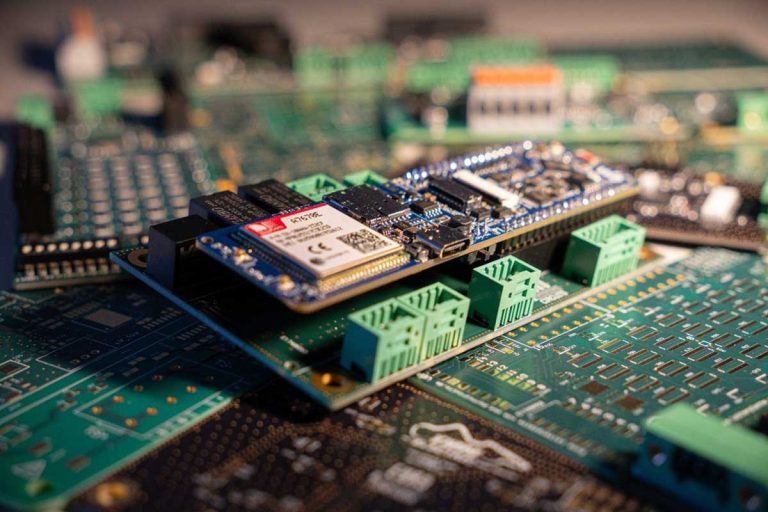
Such sophisticated electronic systems demand precision manufacturing and short iteration cycles. This season, our PCBs are being manufactured by our sponsor, Eurocircuits. In a time-critical development environment like Formula Student, reliable and fast PCB production is essential. Eurocircuits supports us not only with high-quality boards and short lead times. But also with their powerful online Smart DFM tools. Enabling design-for-manufacturing checks early in the layout phase. Identifying potential issues before production significantly reduces risk and helps us stay on schedule.
As we gear up for the upcoming competitions in Poland and Switzerland, we are confident that these technical advancements, supported by Eurocircuits, will help us build on last season’s success and continue pushing the boundaries of our performance.
For more information please visit the Technikum Mittweida Motorsport website.
Bring your product to market on time and within budget – join the Eurocircuits Community


