
FST Lisboa Starts the FST15 Journey
FST Lisboa: 25 Years of Excellence and the First Boards for the FST15
We are FST Lisboa, a formula student team from Portugal that has been building racing cars for 25 years, having built 14 prototypes, 11 being electric and 5 of those with autonomous capabilities.
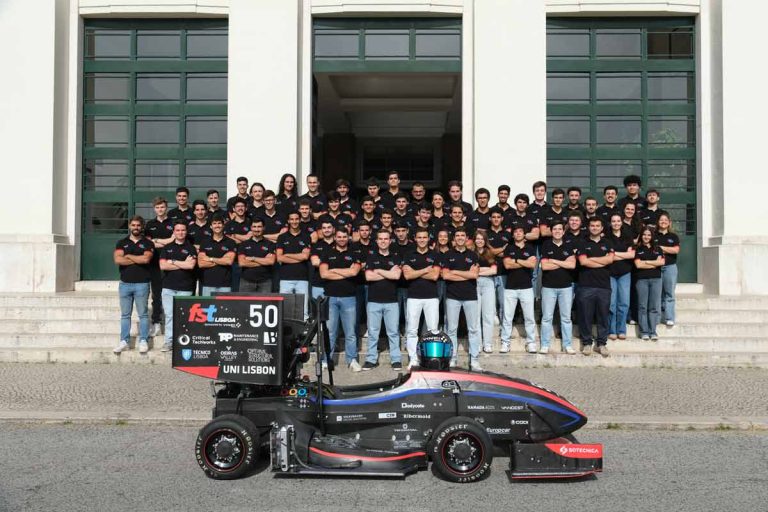
The main goals for this year’s prototype is feasibility. However we still need to think about the future so we want to to test self-made inverters and build a new accumulator.
The 2024-2025 season is not just another year for FST Lisboa; it marks a quarter-century of engineering, passion, and racing. As we celebrate our 25th anniversary, the team is hard at work on our newest challenger: the FST15.
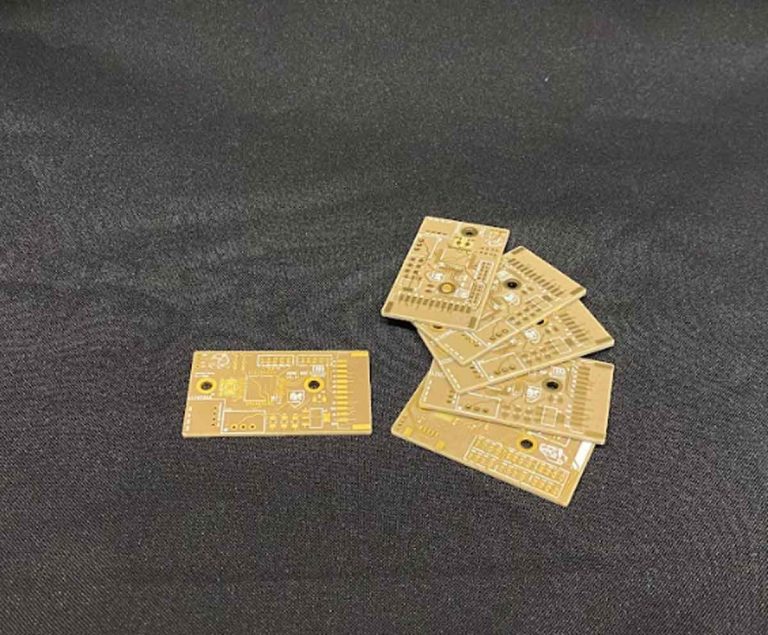
To kick off the development of our milestone car, we recently received our first batch of PCBs from our long-time partner, Eurocircuits. This delivery included the latest iteration of our MiniS2C (Sensor-to-CAN) nodes and the DCDC boards for our upcoming Accumulator.
The “Aesthetic” Prototype: A Lesson in the Design Process
Before diving into the specs, every engineer knows that prototyping comes with surprises. In the rush of finalizing the FST15 designs, we made a classic “human” error: we forgot to include the solder mask layer in the order for these initial boards!
While they arrived looking like silver-and-copper “naked” boards, the precision of the Eurocircuits manufacturing remained top-notch. For a prototype phase, these boards are actually a great educational tool—allowing us to see every trace and via clearly as we begin our initial hardware-in-the-loop testing. It’s a reminder that even after 25 years, there is always something to learn in the design flow!
MiniS2C: Engineering for Robustness
The MiniS2C is the nervous system of our data acquisition, converting analog sensor signals into CAN messages. For the FST15, we didn’t just want it to work; we wanted it to be bulletproof.
Key upgrades include:
- Mechanical Reliability: We moved from a 6×2 MOLEX to a 12-pin single-row connector. This simplifies the crimping process and significantly reduces the risk of contact issues—a critical factor in the high-vibration environment of a Formula Student car.
- Signal Integrity (2-Layer to 4-Layer): This is our most significant jump. Our previous 2-layer design often struggled with EMI as CAN signals were forced too close to power lines. By moving to a 4-layer stackup, we’ve implemented dedicated internal power and ground planes, providing superior shielding and much cleaner signal routing.
- Optimized Layout: We reorganized the component placement to minimize the distance between sensors and the microcontroller. Shorter traces mean less noise and faster response times.
- Calculated Trace Widths: We’ve moved away from “one size fits all” routing. Every trace on the new MiniS2C is dimensioned specifically for its current load, ensuring efficiency and thermal stability.
Powering the Future: The Accumulator DCDC
Alongside the Mini nodes, we received the DCDC boards for our new Accumulator. While this design remains a proven carry-over from our previous successful models, having fresh, high-quality boards is essential as we begin the complex build of our new energy storage system.
Looking Ahead
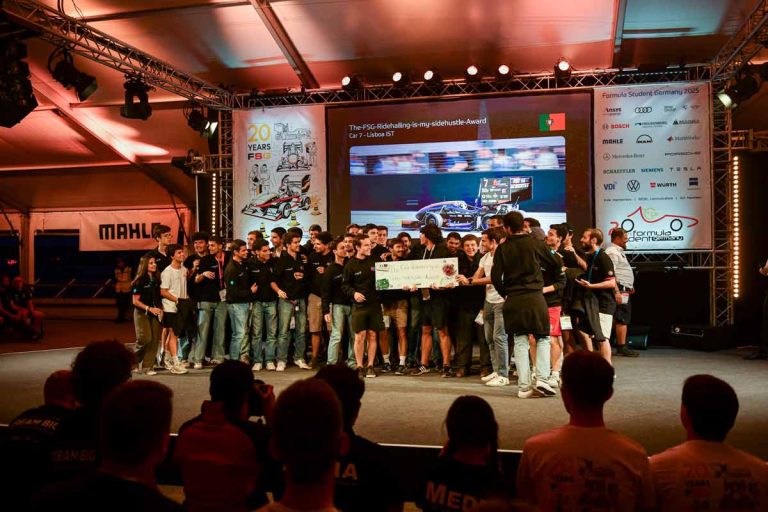
As we celebrate 25 years of FST Lisboa, these boards represent the first physical steps toward the FST15. Despite the missing solder mask on this batch, the electrical quality from Eurocircuits allows us to move forward with firmware development and system validation immediately.
We are proud to have a partner that supports our learning curve and helps us turn our schematics into racing reality. Stay tuned as we dress the FST15 in its full anniversary livery and hit the track!

For more information please visit the FST Lisboa website.
Bring your product to market on time and within budget – join the Eurocircuits Community


