
HyDriven : Hydrogen Racing Under Control
How a Small PCB Decides Whether We Get to Race
The inspection does not begin with the engine. It does not begin with aerodynamics or lap times. It begins with a glance.
A scrutineer stands behind the car, eyes fixed on a single point near the roll hoop. The Tractive System Active Light (the TSAL) must communicate, instantly and without ambiguity, whether the high-voltage system is alive. If it flashes red when it should not, or fails to illuminate when required, the verdict is immediate. The car does not pass. The car does not race.
In Formula Student, this small light carries disproportionate authority. It is not decorative and it is not optional. The rulebook defines precisely how it must behave: when the low-voltage system is active and high voltage exceeds defined thresholds, the red light must flash within a specified frequency band. When the system is confirmed safe (contactors open, precharge inactive, voltage within limits) green may shine steadily. The circuits responsible for these signals must be hard-wired, not software-controlled. Detection paths for red and green must be independent. Even visibility under direct sunlight is regulated.
There is a reason for that precision. In scrutineering, ambiguity equals danger. If the TSAL malfunctions or indicates uncertainty, the tractive system is treated as active. Doubt is not a grey area; it is a red flag.
For the 2025–2026 season, these requirements were tightened and enforced more strictly than ever. What had been sufficient in previous years was no longer robust enough. For HyDriven‹Twente, that realization shaped the very first engineering decision of the new season.
Engineering Hydrogen Under Pressure
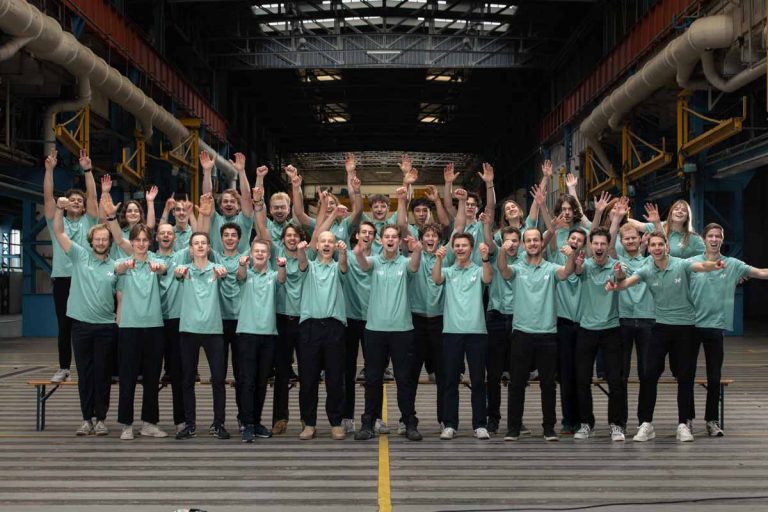
HyDriven Twente is a multidisciplinary student team from the University of Twente and Saxion University of Applied Sciences. Each year, more than thirty full-time students design and build a Formula Student race car powered not only by a high-voltage battery, but also by a self-developed hydrogen fuel cell system.
That dual architecture makes our vehicle fundamentally different from a conventional electric race car. Instead of a single energy source, our powertrain integrates multiple high-voltage domains that must interact seamlessly and safely. The result is greater system complexity, and a heightened responsibility to make safety transparent, inspectable and uncompromising.
This season, before refining performance or optimizing control algorithms, we returned to a more basic question: can our safety systems withstand the strictest possible interpretation of the rulebook?
The answer led us to redesign the TSAL from the ground up.
Building on a Milestone
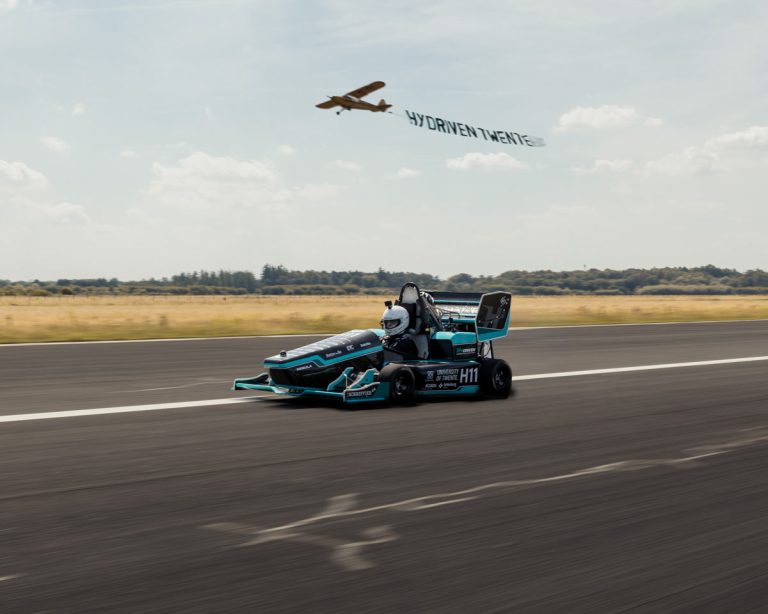
Last season marked a historic achievement for HyDriven. For the first time, the team successfully drove a fully student-built hydrogen-powered Formula Student car. That milestone was supported by custom control electronics, including a fully integrated TSAL architecture produced in collaboration with Eurocircuits.
The transition from multiple satellite boards to a single integrated TSAL solution was completed last year. It reduced wiring complexity and improved inspection clarity. That step laid the foundation.
This year, however, the challenge was different.
There was no radical redesign. No architectural revolution. Instead, the focus shifted toward something arguably harder: professionalisation.
One Board, One Responsibility
Formula Student vehicles are rebuilt every academic year by a new generation of students. That makes continuity a technical challenge. Systems that worked last year must be refined, stabilised, and hardened for the next.
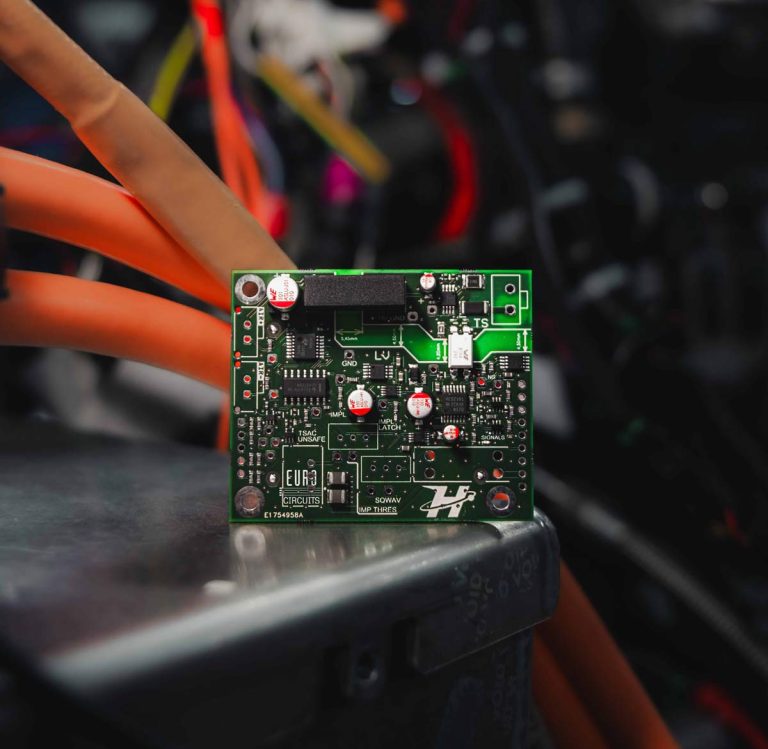
For the 2025–2026 season, the TSAL system was further streamlined. One satellite board, previously associated with the hydrogen subsystem, was removed after careful evaluation of system requirements and rule interpretation. The functionality remained compliant; but the architecture became cleaner.
More importantly, the entire design was revisited with experience in mind.
Small software inconsistencies were eliminated. Edge-case behaviours were analysed and corrected. Electrical robustness was improved. Signal routing was cleaned up. Connector placement became more logical. State transitions were validated more thoroughly.
In isolation, none of these changes appear dramatic. Together, they transform a student-built board into something that behaves predictably under stress; vibration, temperature shifts, electrical noise, and long test days.
The TSAL must indicate high-voltage states independently and unambiguously. If red blinks, the tractive system is considered active. If green shines continuously, the system is safe. There is no negotiation with the rulebook.
In safety-critical systems, refinement is progress.
Hydrogen Adds Complexity
Unlike conventional electric Formula Student cars, HyDriven integrates both a high-voltage battery pack and a hydrogen fuel cell system. That dual-source architecture increases system complexity significantly.
The TSAL does not care whether energy originates from lithium cells or compressed hydrogen. It must simply indicate the true state of the tractive system; always, reliably, and without ambiguity.
As the overall vehicle becomes more competitive; with higher performance targets and tighter packaging, reliability margins shrink. That makes robustness in supporting electronics even more critical.
A safety indicator is only trustworthy if its hardware is stable and its manufacturing consistent.
From Design to Production
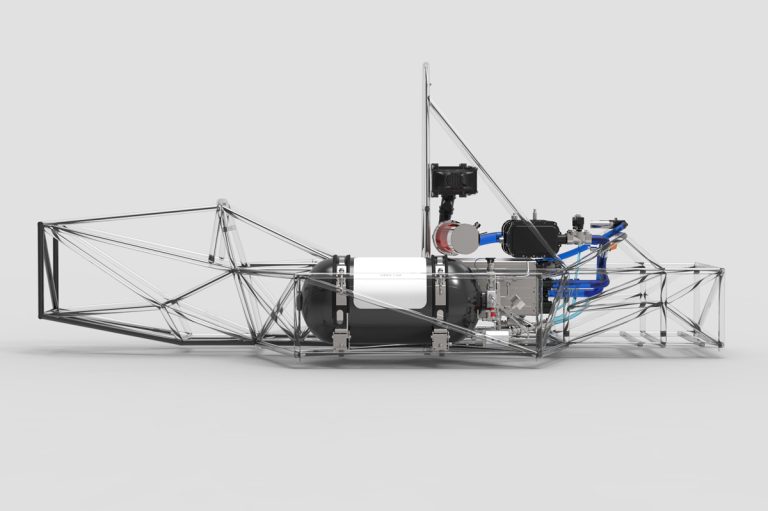
For a student team operating under strict academic deadlines, the transition from CAD to validated hardware is a vulnerable phase. Safety boards cannot afford manufacturing inconsistencies or late-stage surprises.
Working with Eurocircuits allows the team to move from design to production with confidence. Pre-production checks, clear manufacturability feedback, and predictable turnaround times reduce uncertainty in a schedule where every week matters.
The first TSAL boards of the new season did not introduce a radical concept. Instead, they represented something quieter but just as important: continuity, refinement, and trust in execution.
A Competitive Upgrade
To spectators, the TSAL is just a light. To scrutineers, it is a safety contract. To us, it has become something more: a design philosophy.
In hydrogen racing, innovation often draws attention. Yet innovation without clarity is fragile. The TSAL All-In-One PCB embodies a different kind of progress; reducing complexity, isolating safety functions and ensuring that every high-voltage state is communicated without interpretation.
Long before our car accelerates onto the track, it must first earn the right to do so. That right is decided in a quiet inspection bay, in a single glance at a blinking light.
This season, that glance will fall on a small, purpose-built PCB; the first board of our year, and perhaps the most decisive one of all.
This year’s iteration reflects HyDriven’s broader evolution. The systems are becoming more mature. The electronics cleaner. The engineering more deliberate.
In Formula Student, progress is not always about making something entirely new. Sometimes it is about making something dependable.
And when the scrutineer looks up at that small blinking light, dependability is exactly what decides whether you race.
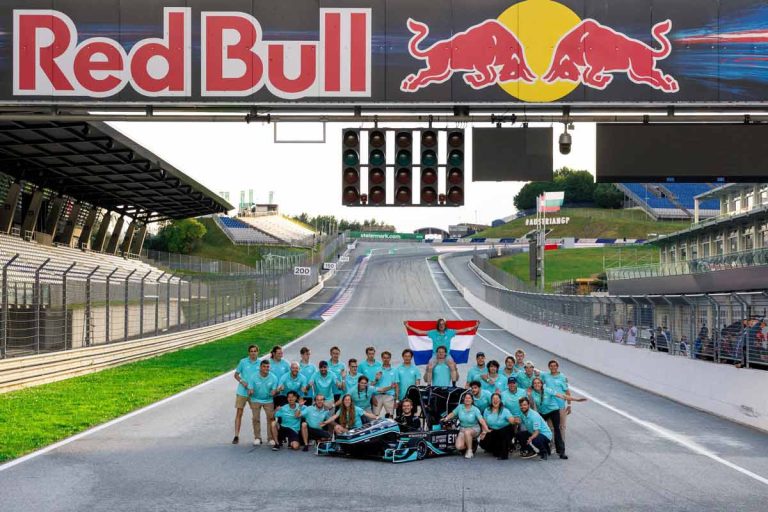

For more information please visit the Hydriven Team website.
Bring your product to market on time and within budget – join the Eurocircuits Community


