
Hyperloop UPV: Developing Hyperloop Tech
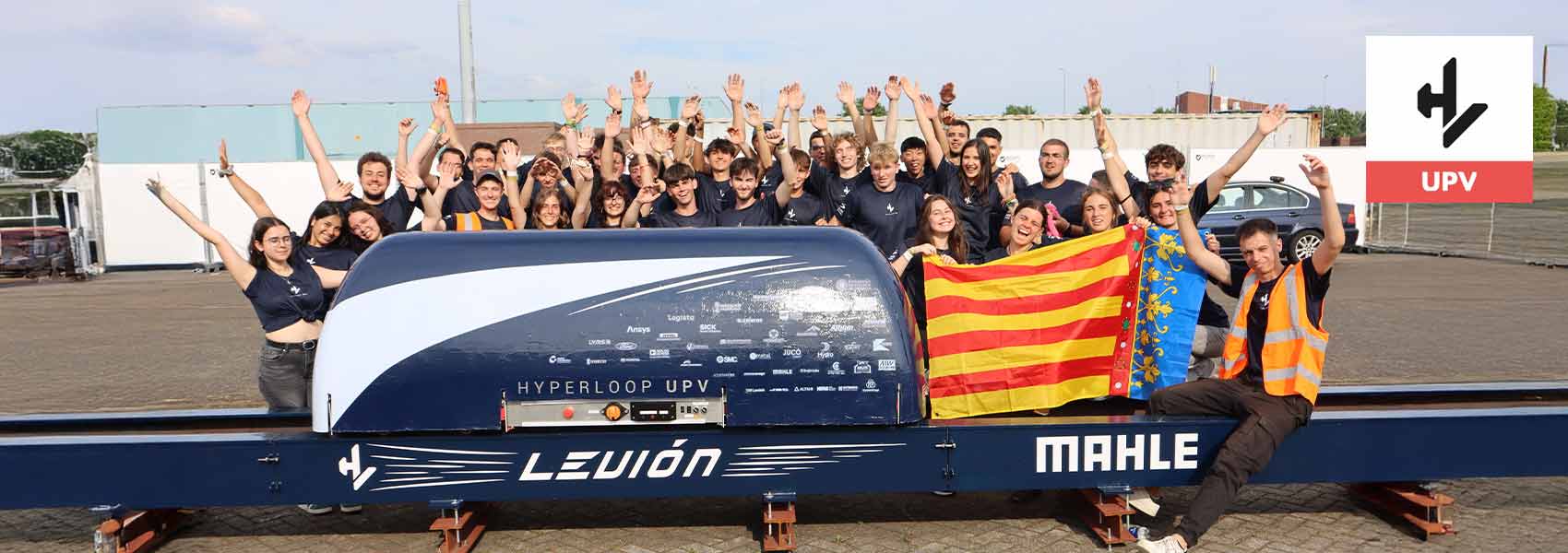
We are Hyperloop UPV, the only student team in Spain dedicated to the research and development of hyperloop technology. Located in a small workshop at the Universitat Politècnica de València (UPV), 45 students of engineering and non-engineering backgrounds make up this season’s team.
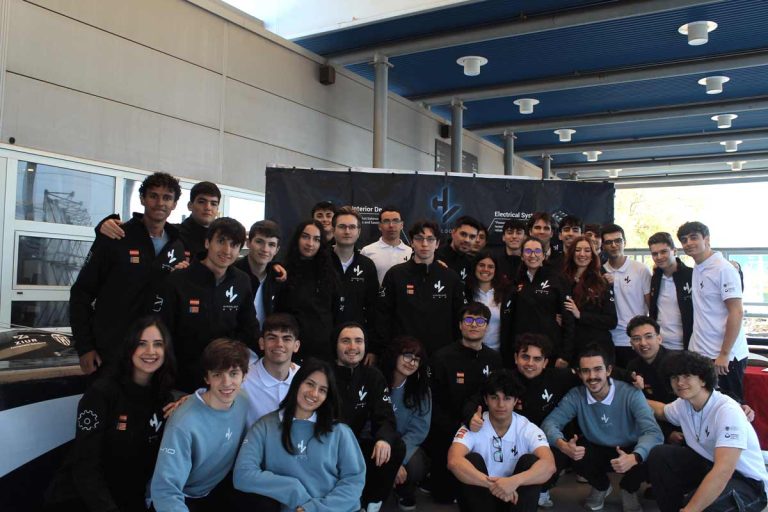
Every year, we work shoulder to shoulder to improve the technology we develop and explore new ways to do it or implement it. We seek creating scalable hyperloop vehicles. Therefore, we research the technical challenges of real-world hyperloop vehicles, and we take them into account for our designs.
But the project’s goal goes beyond the technical work. The team is passionate to spread awareness about the benefits of this means of transport both in speed of travelling between long distances and the small environmental cost that comes with it.
However, our goals wouldn’t be achievable without the support of the companies that help these kinds of projects and Eurocircuits is one of them.
We are currently at a turning point in our season. The design phase is nearly complete, and our focus is starting to shift toward the next chapter: assembling. This stage marks the moment when months of planning and design begin to transform into real pieces, ready to be assembled and incorporated into the new vehicle. As our work evolves into hands-on tasks, preparation and teamwork become essential.
As we mentioned before, at Hyperloop UPV, developing hyperloop technology goes hand in hand with sharing it. Knowledge transfer has always been an important part of our project, whether it’s through events, talks, or activities with students.
But this culture of sharing knowledge doesn’t stop there: it also happens inside the team. Experienced members regularly teach others the practical skills needed to understand and work with our own technology, helping new teammates gain confidence and experience with the tools we use every day.
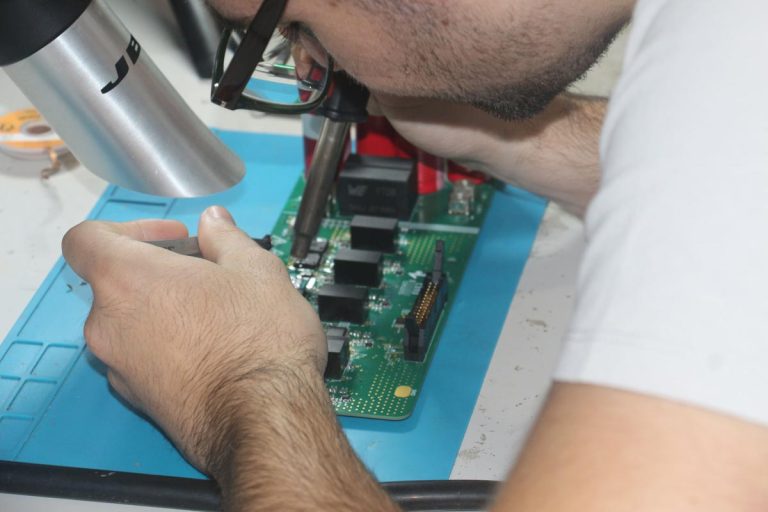
One of the best examples of this is our soldering workshop. As our PCBs and components begin to arrive, the Hardware team has started assembling them. However, instead of handling the soldering themselves, they decided to turn this process into a learning opportunity for the rest of the team through a series of soldering workshops. In these sessions, a Hardware member sits down with a small group of up to five teammates and introduces them to the boards that will be assembled, explaining their purpose and demonstrating how to properly use the soldering tools. After this short introduction, it’s time for the most important part: hands-on practice.
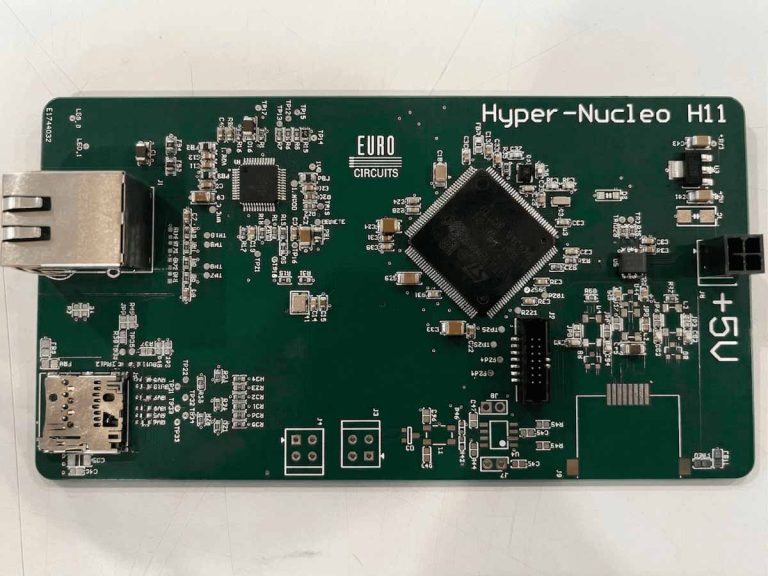
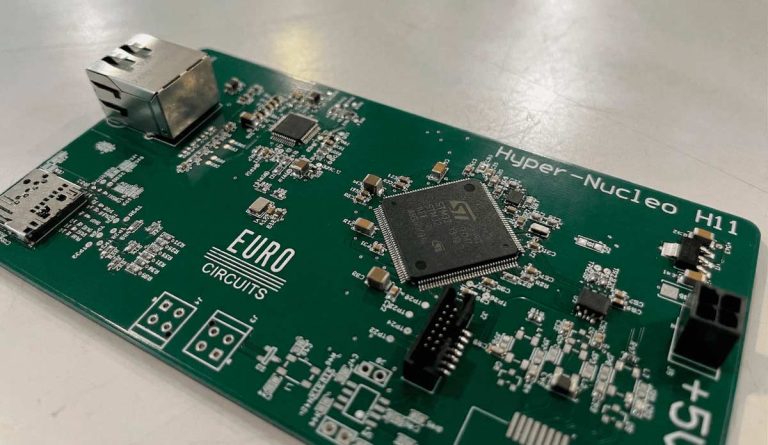
Since the second week of February, the team has been working primarily on the propulsion PCBs, which are currently the most advanced ones. So far, two PCUs (Propulsion Control Units) have already been successfully assembled. However, for this blog we would like to take a closer look at our brand-new PCB thanks to Eurocircuits: the Hyper-Nucleo board.
All boards receive and communicate information. In order to validate this exchange between two PCBs we need to have both of them available. Nonetheless, at the moment, many of these boards are still being assembled. To put an example, this is the case of our A-ADC board (Airgap – Analog to Digital Converter) and the LCUs (Levitation Control Units) boards.
The A-ADC board is responsible for processing the analog signals coming from the airgap sensors, which measure the distance between the pod and the track. This signal is sent to the Control Station, from where it receives back instructions of adjustments that need to be made for the vehicle to keep balance. This information must be sent back to the Levitation Control Unit which will execute the order.
As mentioned before, to test this, we would need both PCBs to be already assembled, but only the A-ADC currently is. To overcome this limitation, the team created the Hyper-Nucleo board. This PCB is not intended for the final vehicle; instead, it is able to test that the flux of information is working as expected in the code, therefore validating the communication.
This is possible thanks to its modules: an Ethernet port, a CAN and an SD slot. These modules are present in most of our boards. A PCB that only uses them would only be able to read code and return expected values by said code. And that’s exactly how the Hyper-Nucleo works.
Going back to the A-ADC – LCU communication example, we’ve tested two important things. First, we prove that the code written to communicate the two PCBs works in connection related terms. Second, by looking at what the microcontroller of the Hyper-Nucleo returns, we check if the code is working as we intended it to do.
As our electronics continue to take shape, boards like the Hyper-Nucleo will soon move from the workbench into the vehicle. In the coming weeks our soldering workshop will keep running, while the team takes the last steps to fully transition into the testing phase.
Our journey is advancing rapidly, and we can’t be more excited to see how the designs are becoming pieces, which will then construct our pod. This passionate work, combined with the support of companies like Eurocircuits, is what makes projects like this possible.

For more information please visit the Hyperloop UPV website.
Bring your product to market on time and within budget – join the Eurocircuits Community


