
Panelisation: Where PCB design meets manufacturing

Panelisation connects PCB design with manufacturing reality
Designers create individual PCB layouts with specific electrical and mechanical requirements. Manufacturing requires a different perspective: multiple PCBs are processed together on panels (known as panelisation).
The panel size is defined by the capabilities of the PCB manufacturer’s equipment. Depending on the PCB dimensions, one or multiple PCB designs are arranged on a panel and processed through all manufacturing steps (drilling, copper plating, imaging, etching and inspection etc.).
In high-volume production, this is straightforward: the same PCB design is repeated across the panel.
For prototypes and low-volume production, the challenge is different. Several PCB designs need to be combined efficiently on one panel. This approach is known as order pooling.
The goal is not simply to use the available space. A well-designed panel creates stable manufacturing conditions and reliable PCB quality.
Panelisation is more than efficient use of space
Material utilisation is an important factor, but a panel also influences manufacturing quality.
The arrangement of PCB designs affects:
- copper distribution
- mechanical stability
- plating behaviour
- process reliability
Therefore a balanced panel ensures stable manufacturing processes and reduces the risk of quality issues.
Copper distribution influences PCB quality
Copper distribution is one of the key factors for reliable manufacturing.
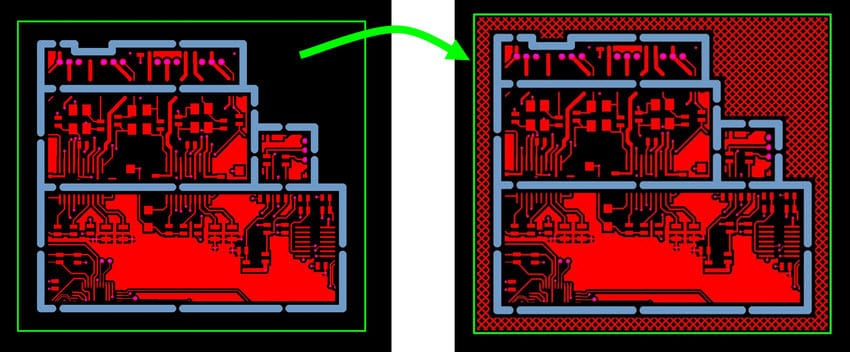
During electroplating, copper is deposited across the panel surface and inside plated through holes. The distribution of copper areas influences plating behaviour and the mechanical stability of the panel.
A balanced copper distribution helps achieve:
- consistent copper thickness
- reliable plated through holes
- improved mechanical stability
- reduced risk of bow and twist
For this reason, PCB designs combined on one panel need to have compatible layer structures and copper distribution.
For instance, PCB designs with very different layer structures and copper distributions should not be combined on the same panel. At Eurocircuits, the Plating Index in PCB Visualizer provides an indication of the expected plating behaviour of a PCB design.
See PCB Checker User Guide – Reviewing the DFM information.
Order pooling: efficient manufacturing for prototypes and low volumes
In series production, one PCB design is usually repeated across the panel.
Prototype and low-volume production requires a different approach. Designers often require small quantities of different PCB designs for testing variants and design iterations.
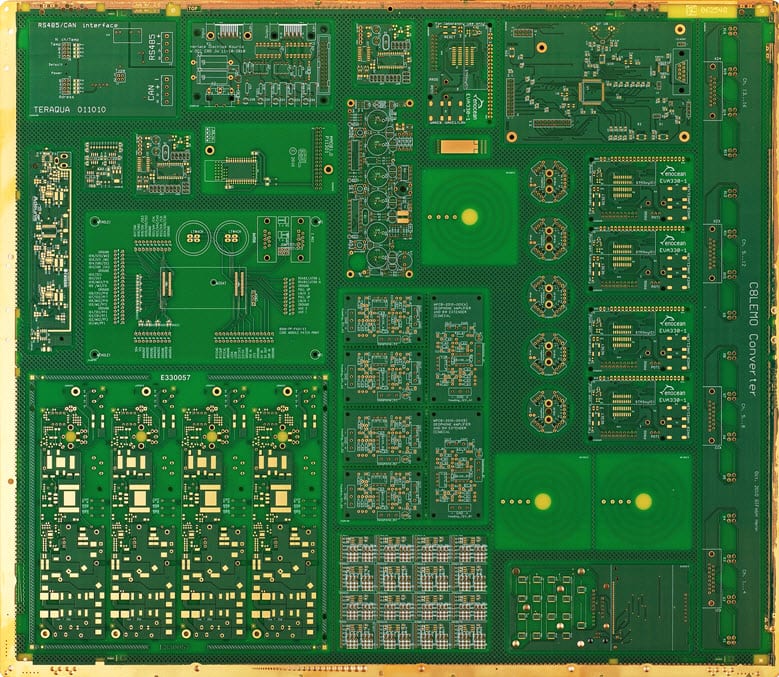
Order pooling combines compatible PCB orders from different customers on a single standard manufacturing panel. Rather than manufacturing each order separately, compatible orders are grouped together on the same panel and produced using the same manufacturing processes.
Not every PCB design is suitable for order pooling. The designs must meet the requirements for stable and reliable manufacturing.
When suitable designs are combined, order pooling improves efficiency in several ways:
- tooling and machine/process setups are shared between multiple orders
- material utilisation is improved
- standardised panels make production more efficient
The objective is not simply to fill a panel. The objective is to create a balanced panel that supports reliable and efficient manufacturing.
Customer panels: maximum control, additional effort
Designers can create their own customer panels when specific arrangements or production requirements need to be defined.
The Eurocircuits Panel Editor supports this process by allowing designers to:
- create step-and-repeat layouts
- add fiducials and tooling holes
- define spacing and panel elements
- check the panel before ordering
This provides maximum control.
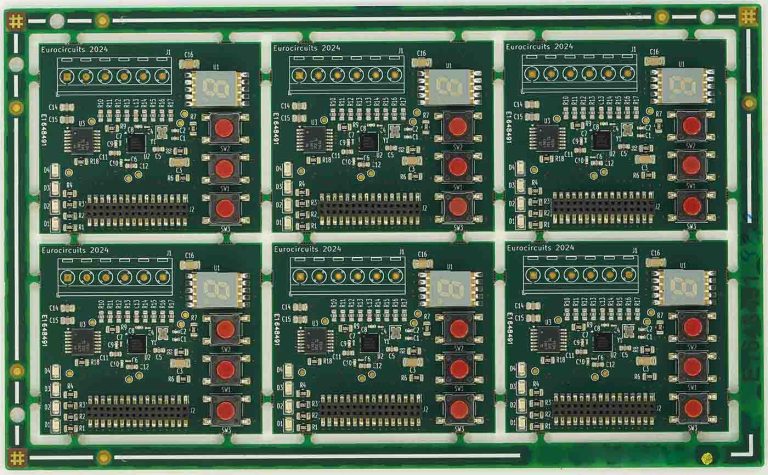
However, creating and maintaining customer panels requires additional effort. Design changes may require updates to panel data, documentation and breakout structures.
For many prototype and low-volume projects, automatic optimisation is the more efficient approach.
SmartSave: upload separately, produce together
SmartSave simplifies order pooling for prototypes and low-volume PCB orders.
Instead of creating a customer panel, designers upload each PCB design separately, then selects multiple designs to order. Eurocircuits software evaluates whether selected PCBs can be efficiently combined within the manufacturing process.
If suitable combinations are possible, the resulting manufacturing benefit can be reflected in the price.
With SmartSave:
- PCB designs remain independent
- revisions and repeat orders stay simple
- no customer panel needs to be created
- suitable combinations are identified automatically
SmartSave does not modify PCB designs or technical requirements. It only optimises how correctly configured PCB orders are manufactured together.
Connecting design decisions with manufacturing reality
A PCB is designed as an individual product, but manufacturing defines how it becomes part of a panel. Good panelisation creates the foundation for reliable production. With automated optimisation and order pooling, Eurocircuits helps designers manufacture prototypes and low volumes cost effectively.
Bring your product to market on time and within budget – join the Eurocircuits Community


