
Delta Racing Season Highlights: Reliability, Endurance & DR25-E
Season of reliability and new milestones
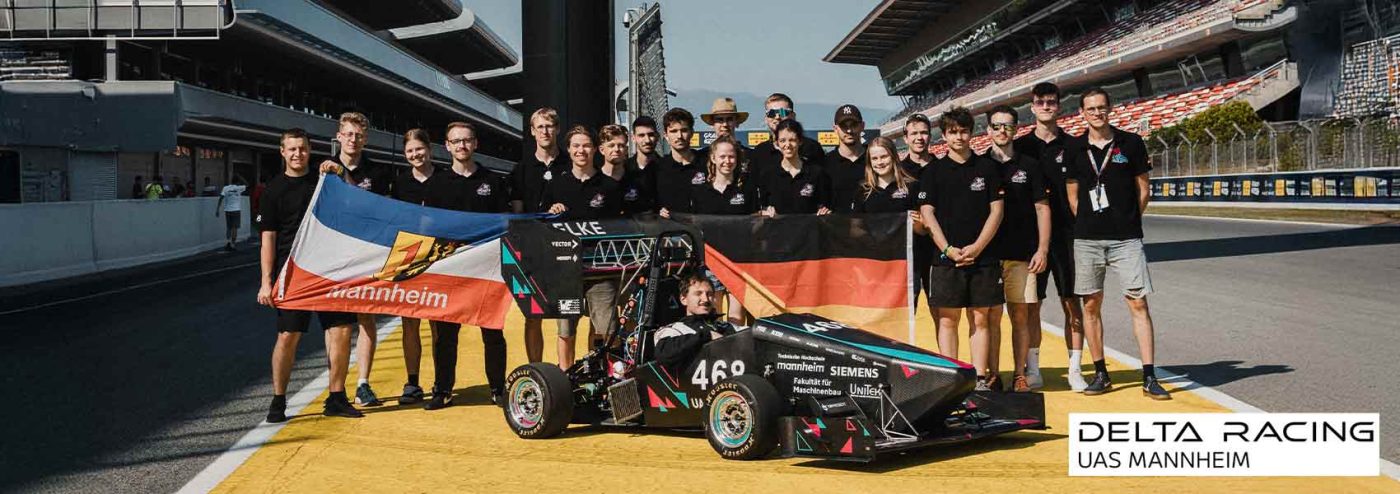
This season marked a turning point for Delta Racing Mannheim: a new dual-mode race car, stronger reliability than ever before, and our first fully finished Endurance at Formula Student Spain with a 7th place in the electric class. As a student team from TH Mannheim, we once again proved that a self-organized group of motivated students can design, build, and race a competitive electric formula-style car alongside top teams from across Europe.
A new generation race car
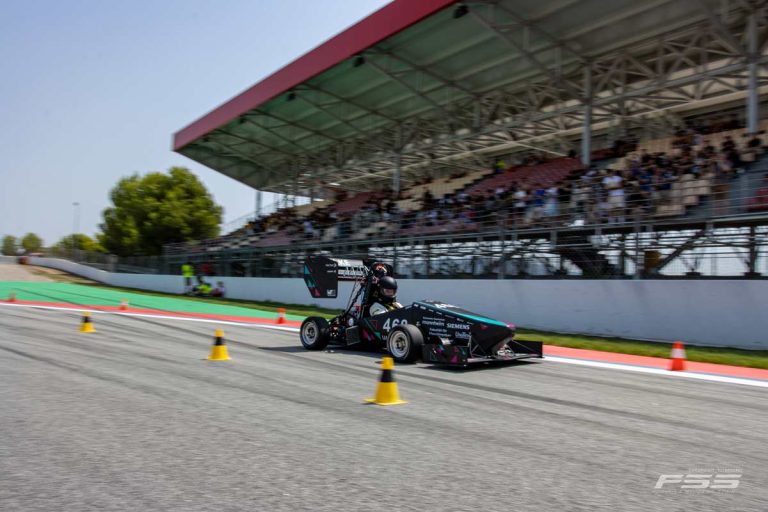
With the DR25-E, Delta Racing presented a car that can compete both in the classic electric class and in driverless disciplines, combining manual and autonomous operation in one platform for the first time in the team’s history. Around 45 students from mechanical engineering, electrical engineering, computer science, business and other programs joined forces to design, simulate, manufacture and validate this vehicle over roughly nine months alongside their studies.
Highlights from Formula Student Spain
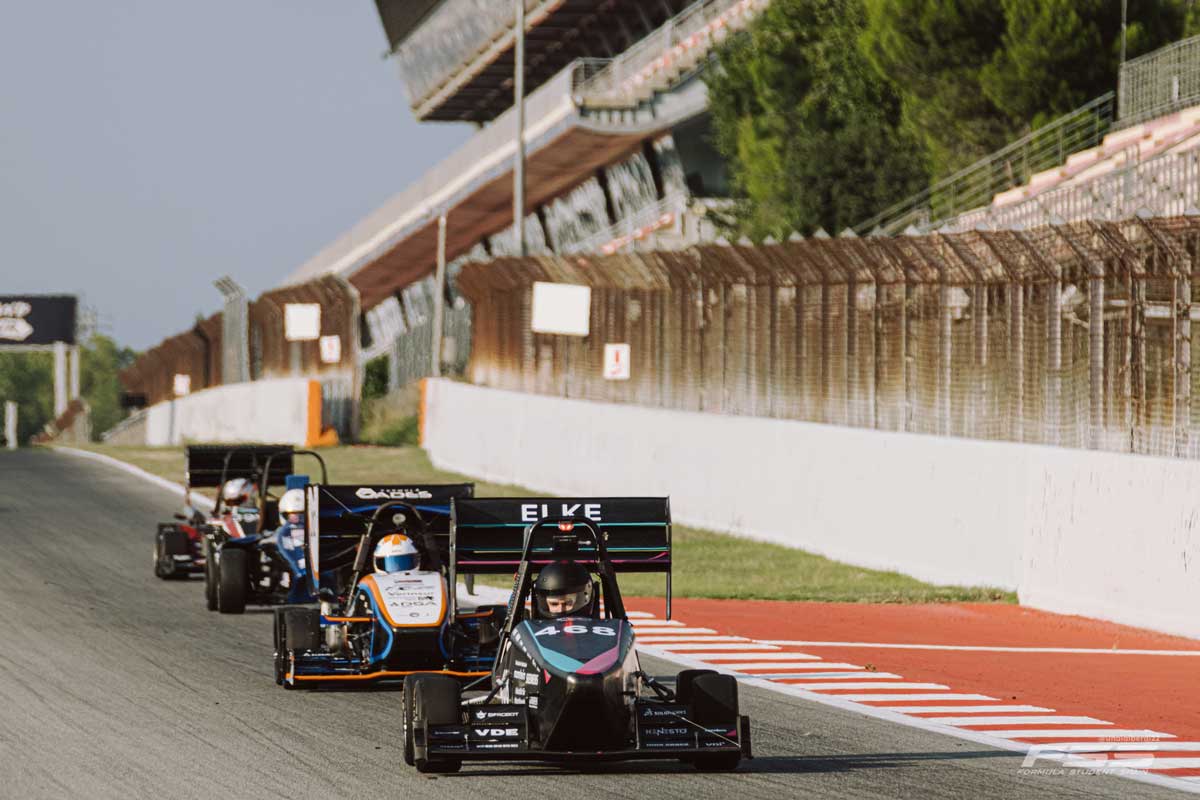
Formula Student Spain takes place at the Circuit de Barcelona-Catalunya, a world‑class racetrack near Barcelona that has hosted international motorsport events since the early 1990s. Over a 22 km Endurance run, teams in the electric class must demonstrate not only speed, but also energy management, thermal stability, and overall vehicle robustness.
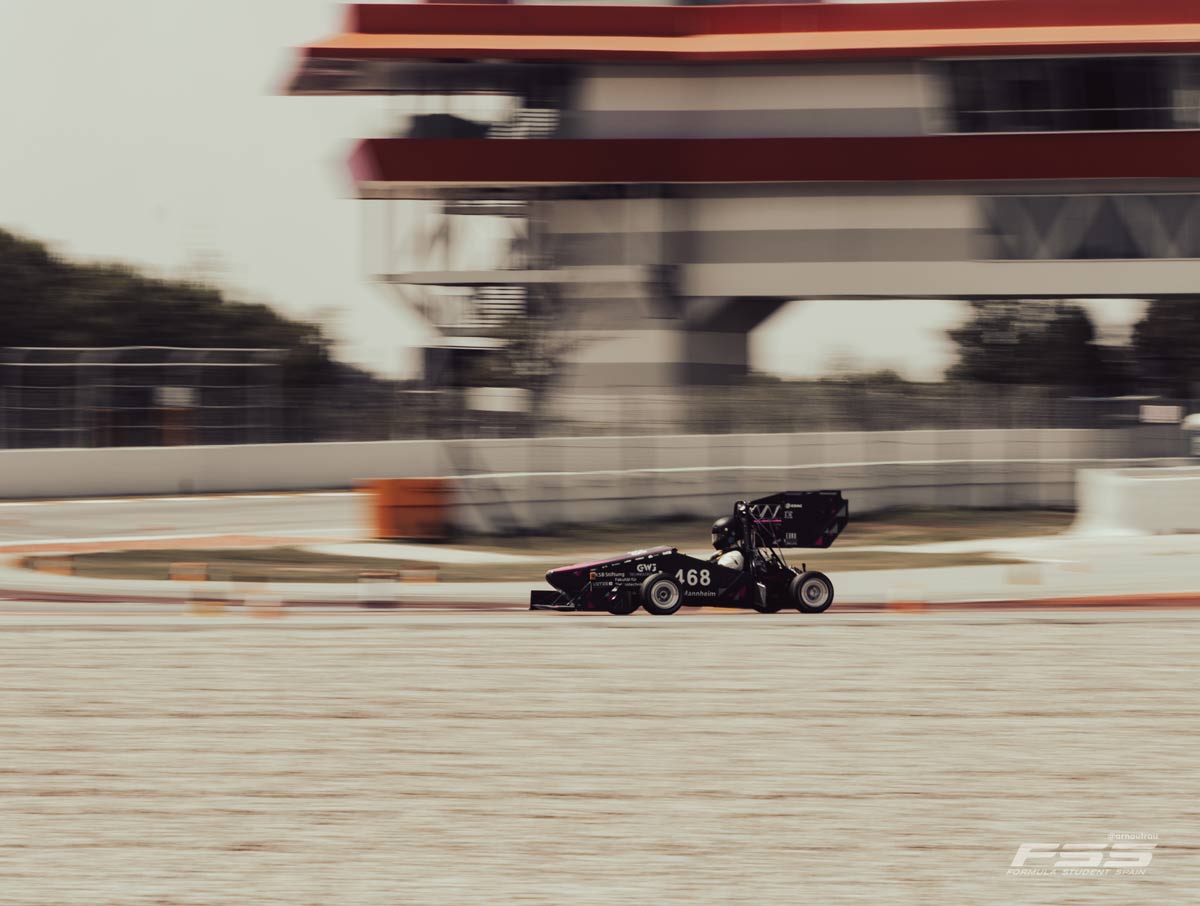
In Spain, our focus on reliability paid off: we brought the DR25-E cleanly through scrutineering and dynamic events and successfully finished the full Endurance distance. Crossing the checkered flag meant a 7th place in Endurance in the electric class for Delta Racing – a result that underlines how far the team has come in race‑pace consistency and systems maturity. One important system needed to reach that goal was our Battery Management Unit.
Battery Management Unit for Delta Racing Formula Student
Core Architecture
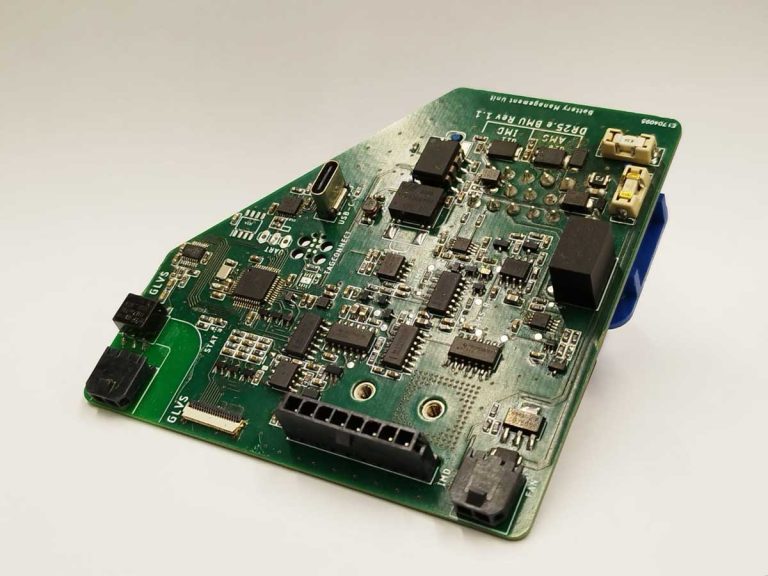
The BMU is built around an STM32F303 microcontroller, providing the processing power needed for real-time battery monitoring and safety management. Communication with our battery’s 10 individual modules is handled through an LTC6820 isoSPI interface, creating a robust daisy-chain topology that monitors both voltage and temperature across the entire pack.
Safety-Critical Features
TSAL Green Circuit (Tractive System Active Light)
The board implements the mandatory TSAL Green indication circuit, which signals that the battery system is in a safe state. This visual safety indicator is a critical requirement in Formula Student competitions.
Hardware Safety Latching
One of the BMU’s most important features is its hardware-based fault management:
- Insulation monitoring device (IMD) faults are latched in hardware
- Battery management system errors trigger immediate hardware latches
- Upon fault detection, the shutdown circuit is opened, immediately disconnecting the high-voltage system
- This hardware-based approach ensures fail-safe operation independent of software
Battery Monitoring
The daisy-chain communication architecture allows continuous monitoring of:
- Cell voltages across all 10 battery modules
- Temperature distribution throughout the pack
- Real-time fault detection and response
Results & Impact
The BMU has proven itself as a reliable safety guardian for our high-voltage system, meeting all Formula Student requirements while providing the monitoring capabilities we need for optimal performance. The sponsorship has directly contributed to our team’s ability to compete at the highest level of Formula Student competition.
Teamwork, learning, and what comes next
Delta Racing operates like a small engineering company: students take responsibility for design, project management, manufacturing, sponsorship, and event logistics, gaining hands‑on experience that builds directly on what they learn in lectures. Events like Formula Student Spain provide the ultimate test bench, where theoretical concepts from power electronics, vehicle dynamics, and control engineering must work under real‑world pressure.
Building on a finished Endurance in Spain and a solid debut season for the DR25-E, the team is already working on the next iteration of the car and the next evolution of the BMU. With each season, more knowledge is transferred between generations of students, more systems are refined, and Delta Racing moves one step closer to the front of the grid in both electric and driverless competition.
Acknowledgments
We extend our sincere gratitude to Eurocircuits for supporting Delta Racing and student motorsport.

For more information please visit the Delta Racing website.
Bring your product to market on time and within budget – join the Eurocircuits Community


