
Formula Student Team Delft’s DUT26
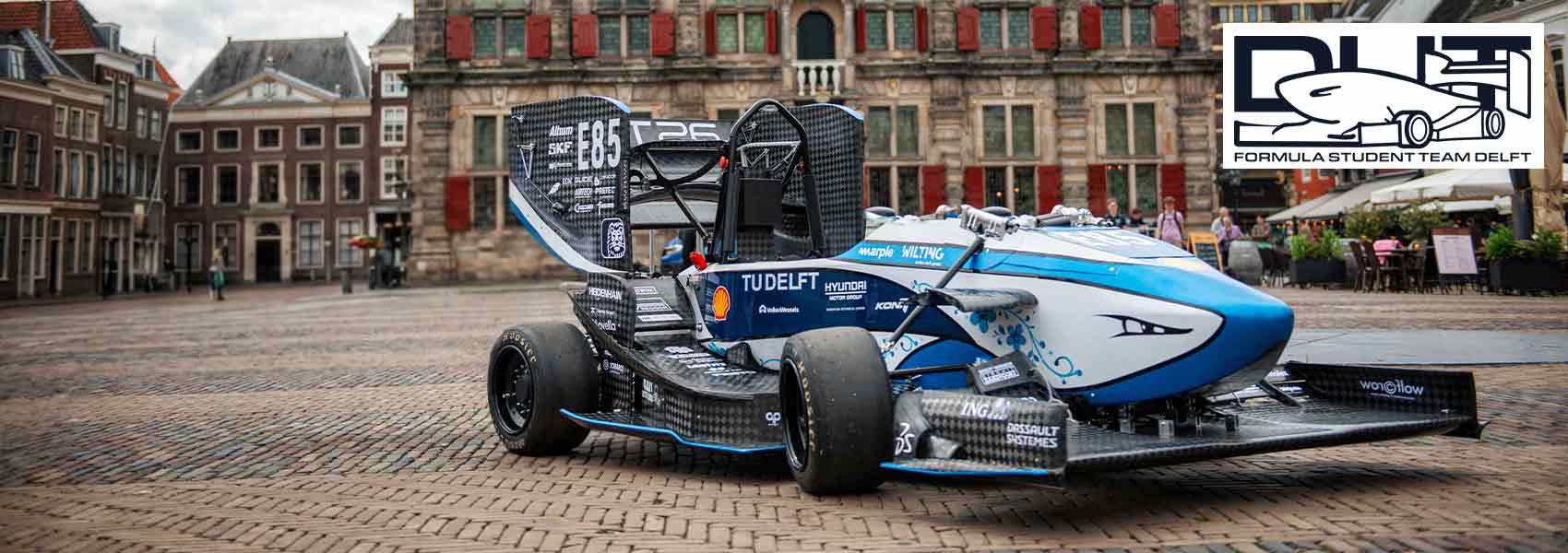
Formula Student Team Delft’s DUT26
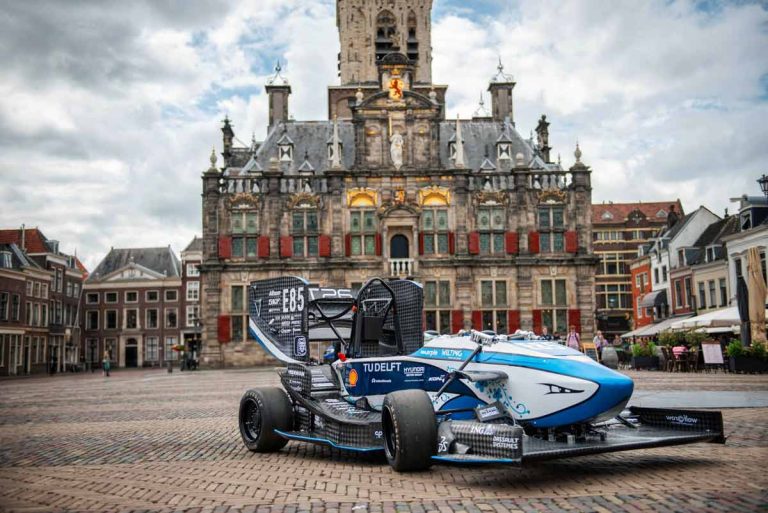
“To win with a cohesive team and a well-understood, reliable car”. That is the goal of the 2026 team of Formula Student Team Delft. The DUT26 is an embodiment of this goal: improved suspension for easier tuning, weight savings across all the departments, and specifically in the Electronics department: a whole new concept for our power distribution.
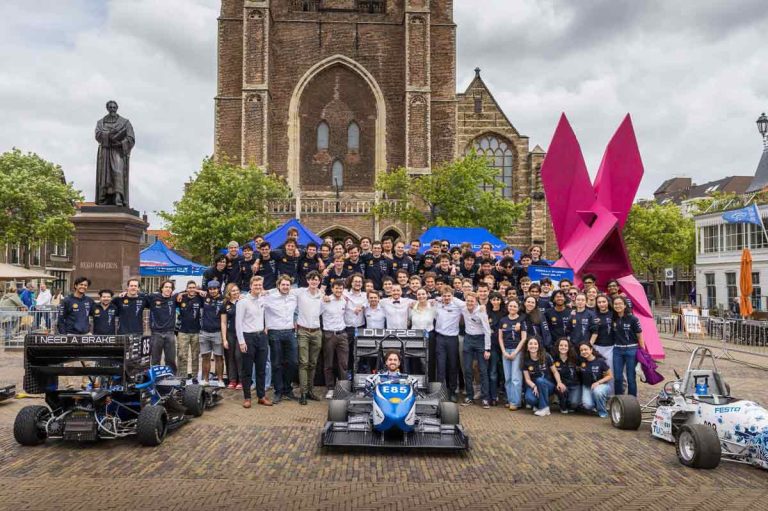
Over the past months, a dedicated team of more than 90 students have been working day and night to design and build a single-seat Formula-style racecar, just like the 25 teams that came before them. Eurocircuits has been a trusted partner of ours for years, providing us with our most valuable PCBs, which, when connected together through our wiring looms, form the nervous system of our car: an indispensable part which forms the basis of the reliable car that we envisioned for this year.
Driving Autonomously
In the end, the goal is, of course, to win. Nowadays, an important part of the Formula Student competitions are the driverless events. For all the manual events, there is a driverless counterpart, which comes with a whole new set of challenges. Now there are motors and actuators mimicking driver input, and there is a whole separate computer that has taken over the tasks of the driver’s brain.
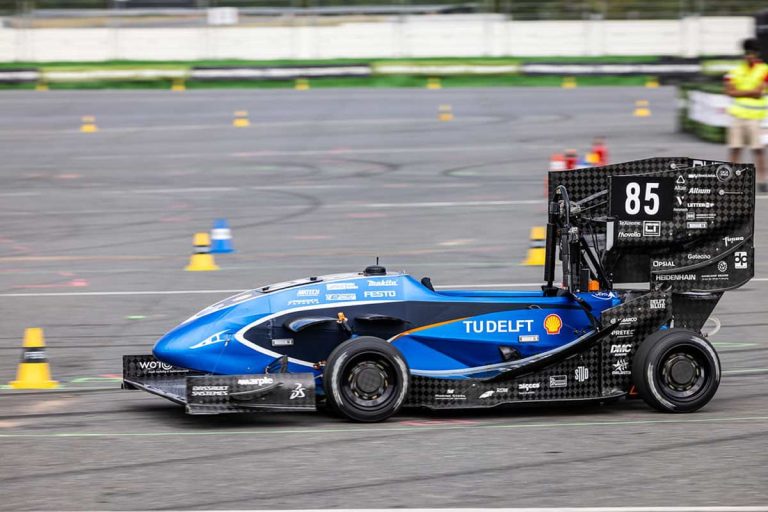
Last year, the DUT25 managed the incredible achievement of completing the first driverless skidpad (a figure eight-shaped track that tests the car’s cornering capabilities) at a competition in Formula Student Team Delft’s history. This year, we are looking to do even more, with the goal to finish both the driverless acceleration and skidpad at all competitions with a competitive time. For that, we need to rigorously test our autonomous hardware and software. And that takes a lot of power. The usual low-voltage battery (LVB) that was used in previous years would drain too fast during these tests, and making it bigger would result in a lot of extra weight.
Power Distribution
The solution, therefore, was to change to a whole new concept for our power delivery and distribution systems. Most significantly, an HV/LV DC/DC converter has replaced the LVB. With the accumulator running on overcapacity, we were even able to implement this completely new PCB without having to increase the weight of the accumulator. The extra energy that we can now use compared to an LVB will increase the amount of time that we can spend on testing our autonomous system significantly. And, as an extra benefit, it is about 1.5kg lighter!
With the goal of making a reliable system, we also switched to a single-voltage, 24V system. This removed the need for conversion, greatly improving the efficiency of the system. A completely new, centralized power split PCB was designed to split the output power of the DC/DC into 3 separate buses, making the system a lot more robust. These buses are also separately fused using eFuses, which allow us to set the current limits through software, and they also monitor the current running through each bus, providing us with valuable data on how well the system is operating.
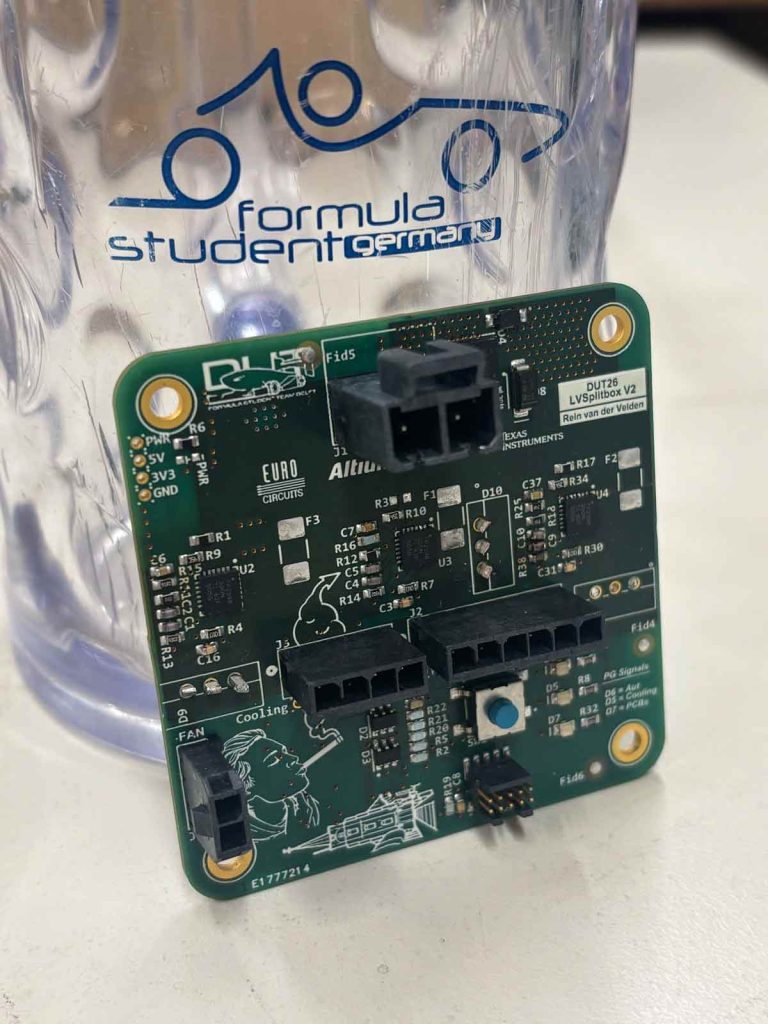
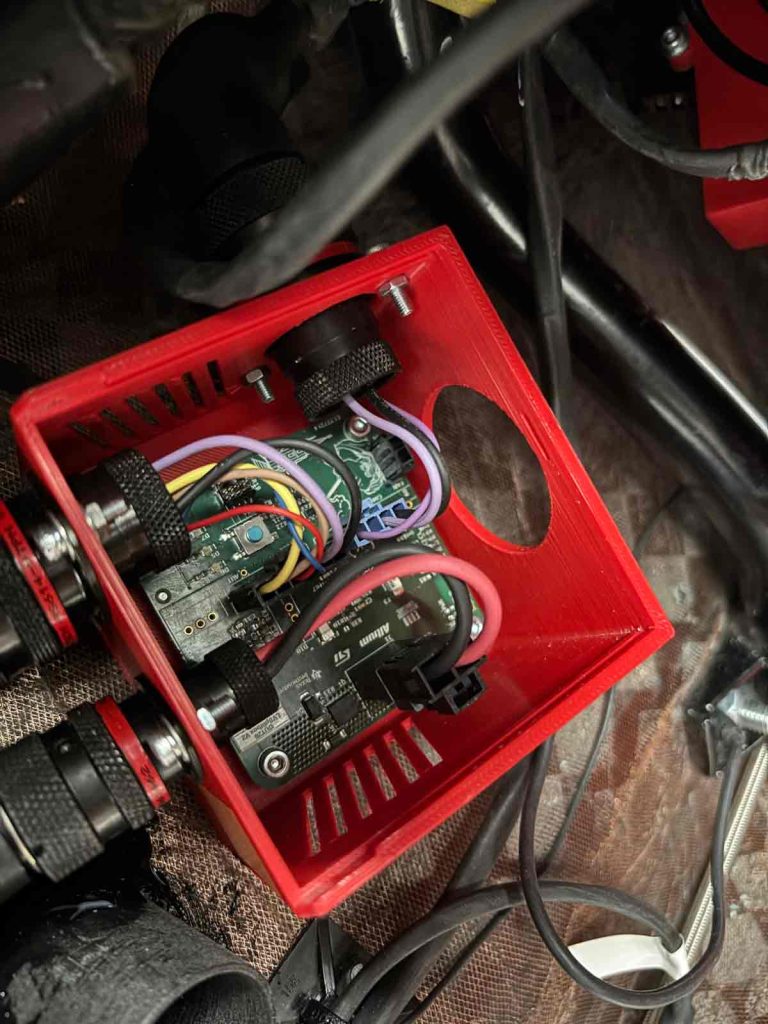
Eurocircuit’s Help
We would not have been able to make these improvements happen without the help of Eurocircuits. Not only do they provide us with high-quality PCBs, but they are also a great help while designing them. For most engineers, these are the first PCBs that they have ever designed. And there are a lot of things that could result in the PCB not working as expected. Luckily, we can find out if there are any mistakes before we have even produced and tested them. The Eurocircuits Design for Manufacturing tool, for example, helps us greatly in catching errors before ordering the final design.
A big thank you to Eurocircuits for their continued support. The DUT26 will continue building and, most importantly, testing the car for both manual and autonomous events. Because after all, the goal is “To win with a cohesive team and a well-understood, reliable car”.
For more information please visit the TU Delft DUT26 website.
Bring your product to market on time and within budget – join the Eurocircuits Community


